

Feng Shui as a Living Spatial Practice
What Is Feng Shui?
A question that has followed humanity since the dawn of civilisation is a deceptively simple one:
how do we live well?
Long before modern wellness frameworks, sustainability movements, or contemporary language around design and wellbeing, ancient cultures were already observing the subtle relationship between people, place, and the forces that shape both.
From ancient China emerged Feng Shui, a living spatial practice developed to understand how environments influence human life, and how, in turn, human intention can harmonise the spaces we inhabit. Rather than treating space as inert or purely functional, Feng Shui recognises it as dynamic, relational, and alive.
The term Feng Shui (commonly pronounced feng shway) translates literally as “wind and water.” These elements are subtle yet powerful, shaping landscapes and lives. Feng Shui speaks to the ever‑changing qualities of space, how energy gathers, flows, disperses, and settles within both natural and built environments.
“Feng shui is restoring the celestial amidst the mundane”
A Practice Rooted in Relationship
At its core, Feng Shui seeks to understand the relationship between heaven, earth, and humankind. This triad reflects a Daoist worldview in which human life is inseparable from the rhythms of nature and the wider cosmos. We do not exist above or apart from our surroundings; we exist within them.
Feng Shui was born as an observational science, of mountains and waterways, light and shadow, climate and seasonality, human settlement and movement. Over time, these observations evolved into a sophisticated system that considers how subtle life‑force energy, known as qi, moves through landscapes, buildings, and rooms.
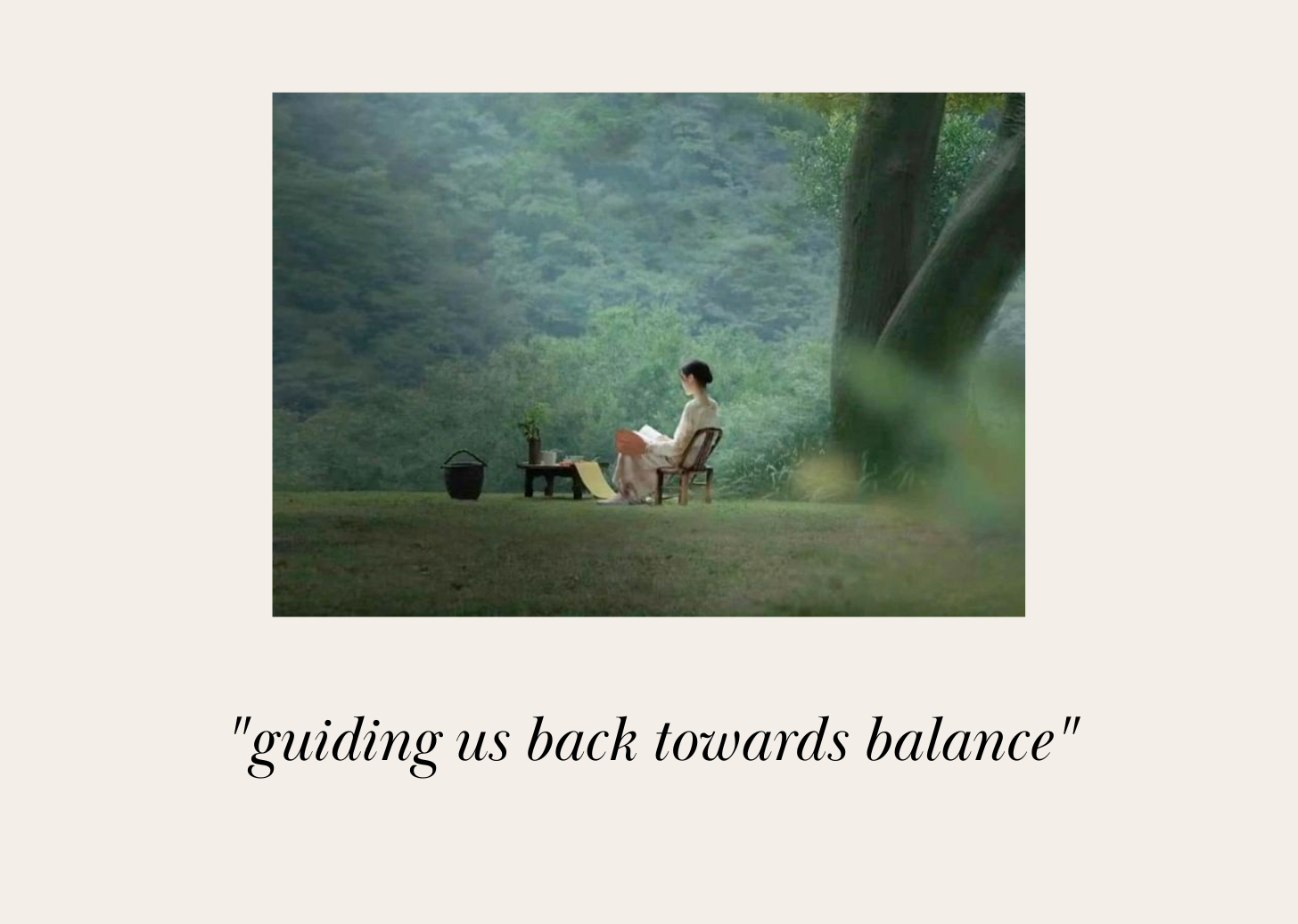
Rather than imposing order onto space, Feng Shui works by astutely observing the natural movement and energy of place and gently guiding it back toward balance.
Feng Shui as a Living System
Feng Shui is both an art and a science, developed and refined over thousands of years within Chinese civilisation. Its wisdom was traditionally passed down through lineage and preserved in classical texts such as the I Ching (易经) alongside shared philosophical foundations with Chinese medicine, astronomy, and geomancy.
Historically, Feng Shui was used to site cities, imperial palaces, ceremonial gardens, and burial grounds, including the famous Ming Tombs. It was considered a matter of profound consequence, influencing prosperity, longevity, lineage, and legacy.
Today, Feng Shui is more commonly applied to homes, workplaces, gardens, and commercial environments. While its context has modernised, its philosophy has not changed. Feng Shui still understands space as responsive to time, use, and intention, and therefore always evolving.
This is why Feng Shui is best understood as a living spatial practice, rather than a static set of rules or decorative trends. Good Feng Shui often expresses itself through a sensible rhythm: movement feels easy, rest feels restorative, and daily life unfolds with less resistance.
A Practice We Already Know
In many ways, Feng Shui is not foreign to us. Humans have always shaped space in response to comfort, safety, beauty, and meaning. We instinctively know when a room feels right, and when it does not.
Feng Shui simply brings structure, language, and a methodology to something intrinsically human: the desire to live in environments that support who we are becoming.
Rather than promising quick fixes or aesthetic perfection, Feng Shui offers something quieter and more enduring, a way of living with space that is attentive, responsive, and aligned.
Feng Shui, at its essence, guides us on how to live well. It displays that by observing our surroundings carefully, honouring natural rhythm, and placing ourselves into space with intention, life can unfold with greater ease, grace, and coherence.
